Rose Quartz Meaning: Geology, Intentions, and Crystal Care
Discover the mineral science, historical lore, and reflective practices behind rose quartz, along with essential guidance on safe cleansing and mindful pairings.
Вкратце
- Rose quartz owes its distinctive pink shade to microscopic mineral inclusions, typically fibrous varieties related to dumortierite.
- With a Mohs hardness of 7, rose quartz is durable enough for daily handling but remains vulnerable to color fading under intense sunlight.
- Metaphysically, the stone serves as a psychological and sensory anchor for self-compassion, relational empathy, and heart-centered reflection.
- Effective cleansing relies on non-abrasive methods such as sound, breath, moonlight, and cool water, avoiding prolonged heat and harsh chemicals.
- Pairing rose quartz with balancing stones like amethyst, rhodonite, or black tourmaline can help contextualize your daily mindfulness practices.
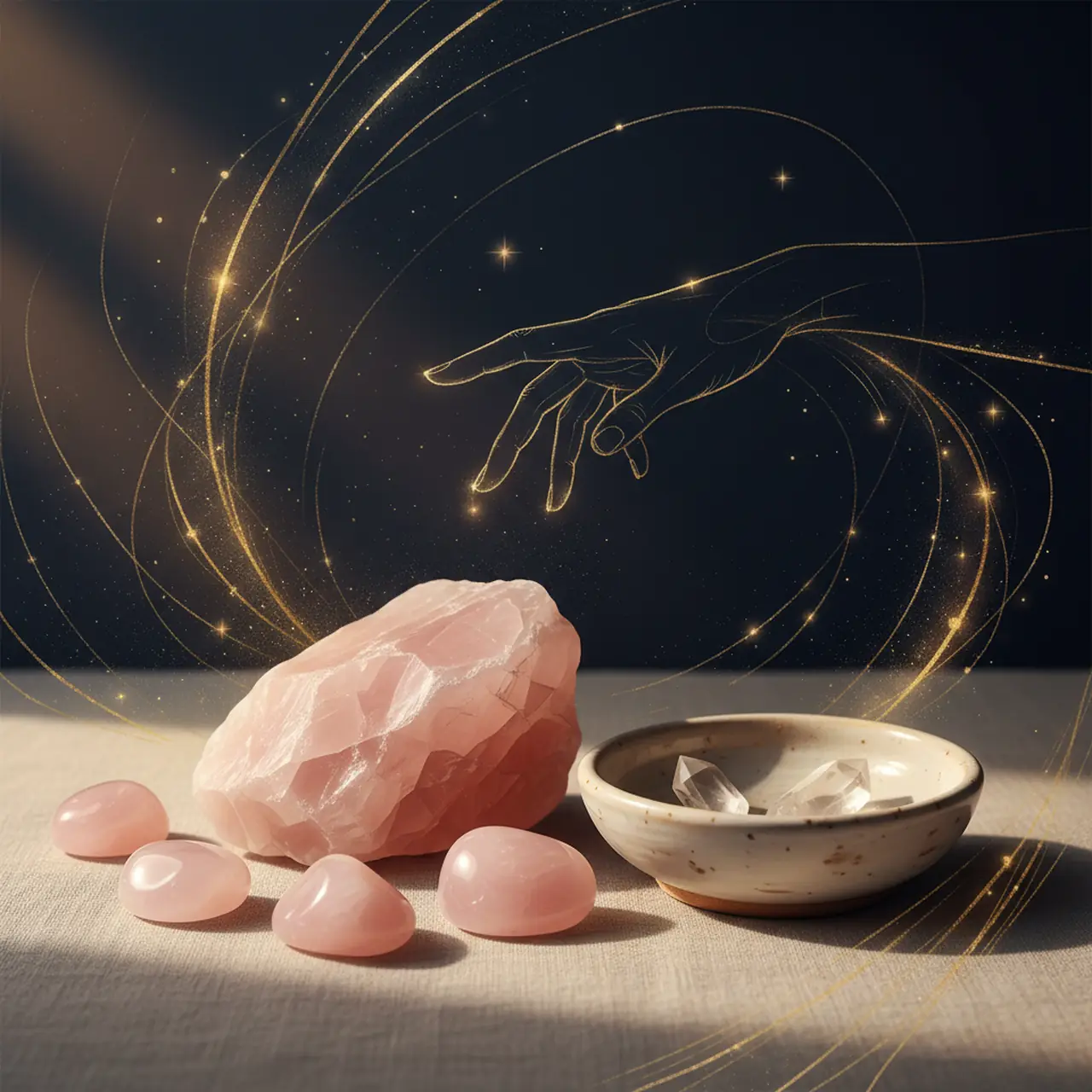
Rose quartz is among the most instantly recognizable minerals on Earth, celebrated for its delicate blush hue and smooth, tactile presence. For centuries, across civilizations from Mesopotamia to ancient Rome, this pale pink variety of quartz has been fashioned into beads, amulets, and ornate carvings. Today, it holds a central place in contemporary crystal collections and mindfulness practices, widely revered as a tangible touchstone for affection, emotional restoration, and gentle self-regard.
Yet beneath its romantic reputation lies a fascinating geological story and a nuanced tradition of energetic symbolism. Rose quartz is not simply a decorative novelty or a quick fix for personal dilemmas; rather, it functions best as a deliberate anchor for intentional living. When we strip away dramatic claims and examine the stone through both mineralogical reality and grounded personal reflection, its true utility comes into focus.
Whether you have inherited a raw specimen, purchased a polished palm stone, or find yourself curious about incorporating minerals into your meditation space, understanding rose quartz enhances the relationship you build with it. This guide covers how rose quartz forms within the earth, the traditions surrounding its emotional associations, effective ways to pair it with other stones, and practical instructions for keeping your specimen physically pristine and energetically clear.
The Science of the Stone: Mineralogy and Formation
At its chemical foundation, rose quartz is silicon dioxide (SiO2), belonging to the quartz family—one of the most abundant mineral groups in the continental crust. While standard quartz forms clear, well-defined six-sided prisms, classic rose quartz typically occurs in massive, anhedral formations within granitic pegmatites and hydrothermal veins. These massive deposits lack external crystal faces because the mineral crystallizes rapidly in crowded geological environments alongside feldspar and mica.
The origin of rose quartz's pink hue was long debated among mineralogists. Early hypotheses attributed the color to traces of titanium, manganese, or iron within the crystal lattice. Modern spectroscopic analysis has revealed that the widespread massive variety usually derives its color from submicroscopic, interwoven inclusions of an aligned pink borosilicate mineral structurally related to dumortierite. When light enters the stone, these microscopic fibers scatter the light, producing the characteristic translucent, hazy blush that distinguishes rose quartz from other pink gems like morganite or kunzite.
A rarer variety, known as crystalline rose quartz or pink quartz, does form distinct euhedral crystals. In these rare specimens, color centers created by aluminium and phosphorus substitutions interacting with natural gamma radiation are responsible for the pigmentation. Regardless of the exact geological mechanism, rose quartz measures a sturdy 7 on the Mohs hardness scale, making it resilient against surface abrasions from household dust, which is predominantly comprised of softer quartz particles.
The soft, milky glow of massive rose quartz is not an illusion; it is the visual result of billions of microscopic mineral fibers scattering incoming light.
Figures
Comparative Mohs Hardness of Common Contemplative Stones
- Selenite2
Easily scratched by fingernails
- Calcite3
Scratched by a copper coin
- Fluorite4
Soft; vulnerable to scratches
- Lapis Lazuli5
Moderate hardness; porous
- Rose Quartz7
Durable; scratches glass easily
- Topaz8
Very hard mineral
Rose quartz sits comfortably at a hardness of 7, making it durable compared to softer altar minerals.
Historical Lore and Cultural Symbolism
Human engagement with rose quartz spans millennia. Archaeological excavations in the ancient territory of Mesopotamia (modern-day Iraq) have yielded rose quartz beads dating back to approximately 7000 BCE. In these ancient trading hubs, the stone was shaped into cylindrical seals and personal ornaments, prized for its subtle warmth and ease of shaping compared to harder precious gems.
In ancient Egyptian and Roman societies, rose quartz was closely associated with physical rejuvenation and beauty rituals. Roman cosmetic preparations occasionally incorporated powdered quartz, believed to clear the complexion and soften wrinkles. Roman seal rings carved from the mineral served as signatures validating agreements of trust and commerce, quietly establishing the stone's long-standing connection to integrity, interpersonal fidelity, and goodwill.
Mythological traditions further enriched the stone's narrative. Classical Greek mythology tied the creation of rose quartz to the tragic romance of Aphrodite and Adonis; according to legend, the mineral was stained pink when their mingled blood splashed onto white quartz following an attack by Ares. Across centuries, these cultural myths have converged into a consistent thematic archetype: rose quartz represents the enduring power of vulnerability, reconciliatory love, and the tender preservation of the human spirit through grief.
- Mesopotamian artifacts show decorative rose quartz beadwork dating to 7000 BCE.
- Egyptian practitioners used quartz carvings in cosmetic and funerary contexts.
- Greco-Roman myths linked the pink hue to stories of sacrifice, devotion, and renewal.
- Renaissance lapidaries used the mineral for intricately carved cameos and talismans.
Traditional Intentions: Cultivating Heart-Centered Awareness
In contemporary contemplative frameworks and modern energy practices, rose quartz is universally aligned with the heart chakra (Anahata). Situated at the center of the chest, Anahata governs our capacity for compassion, emotional integration, empathy, and boundary-setting. When working with stones as cognitive anchors, rose quartz provides a physical reminder to soften defensive postures and engage the world with measured kindness.
It is vital to approach crystal work without expecting magical external interventions. Rose quartz does not compel another person to fall in love, nor does it magically erase long-standing psychological wounds. Instead, it operates through the psychological mechanism of associative conditioning. Holding a cool, smooth stone during quiet contemplation signals the nervous system to downregulate, encouraging a shift from fight-or-flight reactivity into receptive awareness.
Many practitioners find that rose quartz is most potent when focused inward. Rather than directing intention outward toward romantic acquisition, the stone excels as an instrument for cultivating self-forgiveness and dismantling internal narratives of inadequacy. In this context, the stone's gentle aesthetic reflects the patience required to develop a healthy, sustainable relationship with oneself.
Figures
Primary Contemplative Focuses for Rose Quartz
- Self-Compassion & Inner Dialogue40%
- Relational Empathy & Listening25%
- Grief Processing & Acceptance20%
- Somatic Grounding & Stress Relief15%
Estimated proportion of practical applications reported in personal mindfulness and journaling routines.
Harmonious Mineral Pairings
While rose quartz functions beautifully as a standalone focal piece, pairing it with complementary minerals can help tailor your contemplative practice to specific emotional states. Different mineral textures, colors, and geological backstories offer varied symbolic counterweights, preventing emotional exploration from becoming overly sentimental or unfocused.
One classic pairing is rose quartz and amethyst. Both belong to the macrocrystalline quartz family, sharing identical silicate architecture and Mohs hardness. Where rose quartz emphasizes emotional softness and relational warmth, amethyst introduces an atmosphere of mental clarity and calm discernment. Together, they create a balanced environment for evening journaling, ensuring that emotional release is guided by clear, reflective perspective.
For individuals processing acute grief or navigating complex interpersonal boundaries, combining rose quartz with rhodonite or black tourmaline offers structural support. Rhodonite, with its striking veins of black manganese oxide running through pink matrix, symbolizes the integration of emotional pain alongside love. Black tourmaline provides a contrasting, grounded anchor, reinforcing the truth that genuine compassion requires sturdy personal boundaries.
- Amethyst: Encourages mental composure and prevents emotional overwhelm.
- Rhodonite: Aids in processing acute relational friction and boundary work.
- Clear Quartz: Serves as a neutral amplifier, clarifying primary intentions.
- Black Tourmaline: Provides a grounded counterbalance, reinforcing healthy limits.
Caring for Your Stone: Cleansing and Maintenance
Because rose quartz frequently absorbs natural skin oils and settles in living spaces where dust accumulates, routine physical maintenance is essential. Cleaning your stone requires nothing more complicated than warm water, a mild chemical-free soap, and a soft microfiber cloth. Avoid using harsh chemical detergents, ultrasonic cleaners, or acidic solutions, which can etch the polished surface or degrade microscopic fissures within the stone.
A critical consideration in caring for rose quartz is its vulnerability to solar radiation. Prolonged exposure to direct, unfiltered sunlight can cause the pink hue to fade over time, particularly in crystalline varieties or stones whose color centers are sensitive to heat and ultraviolet rays. To preserve the vibrant color of your specimens, place them on windowsills that receive indirect light, or store them away from sunny exterior ledges.
Energetic cleansing practices are subjective rituals intended to reset your mental association with the stone. Popular non-damaging methods include resting the stone on a bed of dry brown rice, passing it through aromatic smoke from cedar or lavender, exposing it to sound vibrations from a singing bowl, or setting it under the soft light of the full moon. Cool running water is also safe for short rinses, provided the stone is dried thoroughly.
Treat your rose quartz with the same gentleness it symbolizes: avoid direct, scorching sun and harsh abrasives to keep its blush radiant.
Timeline
A Mindful Evening Cleansing & Resetting Cycle
1. Physical Wash
10Gentle wash in lukewarm water with mild soap
2. Smoke or Sound Clear
20Auditory vibration or aromatic smoke immersion
3. Overnight Rest
480Placed in passive moonlight or upon a selenite slab
4. Morning Anchor
10Brief tactile meditation to set daily intention
A structured four-stage timeline for physically refreshing and resetting the intention of your specimen.
Practical Ways to Integrate Rose Quartz Daily
Incorporating rose quartz into your everyday lifestyle does not require elaborate ceremonies. The simplest method is placing a palm-sized tumbled stone on your workspace desk or near your computer keyboard. In moments of professional friction or high cognitive strain, picking up the stone and noticing its smooth surface and cool temperature provides a rapid sensory grounding technique, interrupting stress cycles before they escalate.
Another meaningful application is pairing rose quartz with an intentional journaling practice. Placing the stone beside your notebook before writing creates a quiet ritual boundary, inviting honest, non-judgmental self-inquiry. Prompts centered on forgiveness, gratitude, and emotional boundaries align naturally with the stone's symbolic history.
Finally, rose quartz can serve as a calming presence within the sleep environment. Placing a polished specimen on a nightstand reinforces the bedroom as a sanctuary dedicated to rest, recovery, and psychological decompression. By establishing clear environmental cues, your stone becomes a consistent marker for closing the mental tabs of the day and stepping into restorative peace.
Rose quartz occupies a singular place in the world of minerals, uniting compelling geological complexity with thousands of years of human affection and lore. Its value lies not in dramatic promises of mystical intervention, but in its steady capacity to serve as an anchor for the qualities we most easily neglect: patience, self-compassion, and emotional presence.
When you care for your stone with mindful attention—protecting its blush from harsh sunlight and cleansing it with gentle methods—you mirror the very care you are cultivating within yourself. Let your rose quartz remain a quiet, grounding companion on your journey toward deeper empathy and balanced living.
StartBound.Life
Explore Your Crystal Alignment
Discover how rose quartz and other resonant stones can support your current personal cycle. Visit our interactive crystal explorer to personalize your contemplative practices today.
Explore Rose Quartz ToolsВопросы читателей
Can rose quartz go in water safely?
Yes, rose quartz can safely be washed in clean, lukewarm water. With a Mohs hardness rating of 7, it is non-porous and will not dissolve or degrade upon contact with water. However, avoid submerging stones with deep natural fissures for extended periods, and avoid soaking specimens with metal mountings or adhesives. Always dry the stone thoroughly with a soft cloth after rinsing.
Why has my rose quartz lost its pink color?
The most common cause of color fading in rose quartz is prolonged exposure to direct sunlight or ultraviolet light. The color centers and microscopic inclusions that produce its pink hue can degrade when heated or exposed to intense solar radiation over months. To preserve the stone's natural tone, display it in areas that receive indirect light rather than on sun-drenched windowsills.
How can I tell if my rose quartz is genuine or fake?
Genuine rose quartz is cool to the touch, noticeably heavy for its size, and typically features natural internal veining, slight cloudiness, and minor imperfections. Synthetic glass imitations often contain tiny, spherical air bubbles visible under magnification and may feel unusually light or warm. Additionally, real rose quartz will easily scratch ordinary window glass without sustaining damage itself.
Which chakra is rose quartz associated with?
Rose quartz is traditionally aligned with the fourth chakra, known as the Heart Chakra or Anahata. Located at the center of the chest, this energy center represents compassion, empathy, forgiveness, and the capacity for healthy relationships. In modern mindfulness traditions, rose quartz is used as a tactile focal point to balance and open this emotional center.
Is rose quartz safe to use in crystal elixirs?
While pure rose quartz is chemically stable silicon dioxide, raw specimens may contain hidden mineral inclusions, microscopic cracks harboring bacteria, or polishing compounds from manufacturing. For safety, it is always recommended to use the 'indirect method' for elixirs, placing the stone inside a sealed glass container rather than dropping it directly into drinking water.
Продолжить обсуждение
Больше из журнала
Больше по этой теме
Stones, their traditional intentions, pairings and care.
Crystals →Предсказания предлагаются для размышления и развлечения. Они не заменяют медицинские, юридические, финансовые или психологические консультации.