The Seven Chakras: A Clear Map of Your Energy Body
Demystify the subtle energy system with a practical guide to the seven chakras, exploring their seats, elements, and emotional signatures without esoteric jargon.
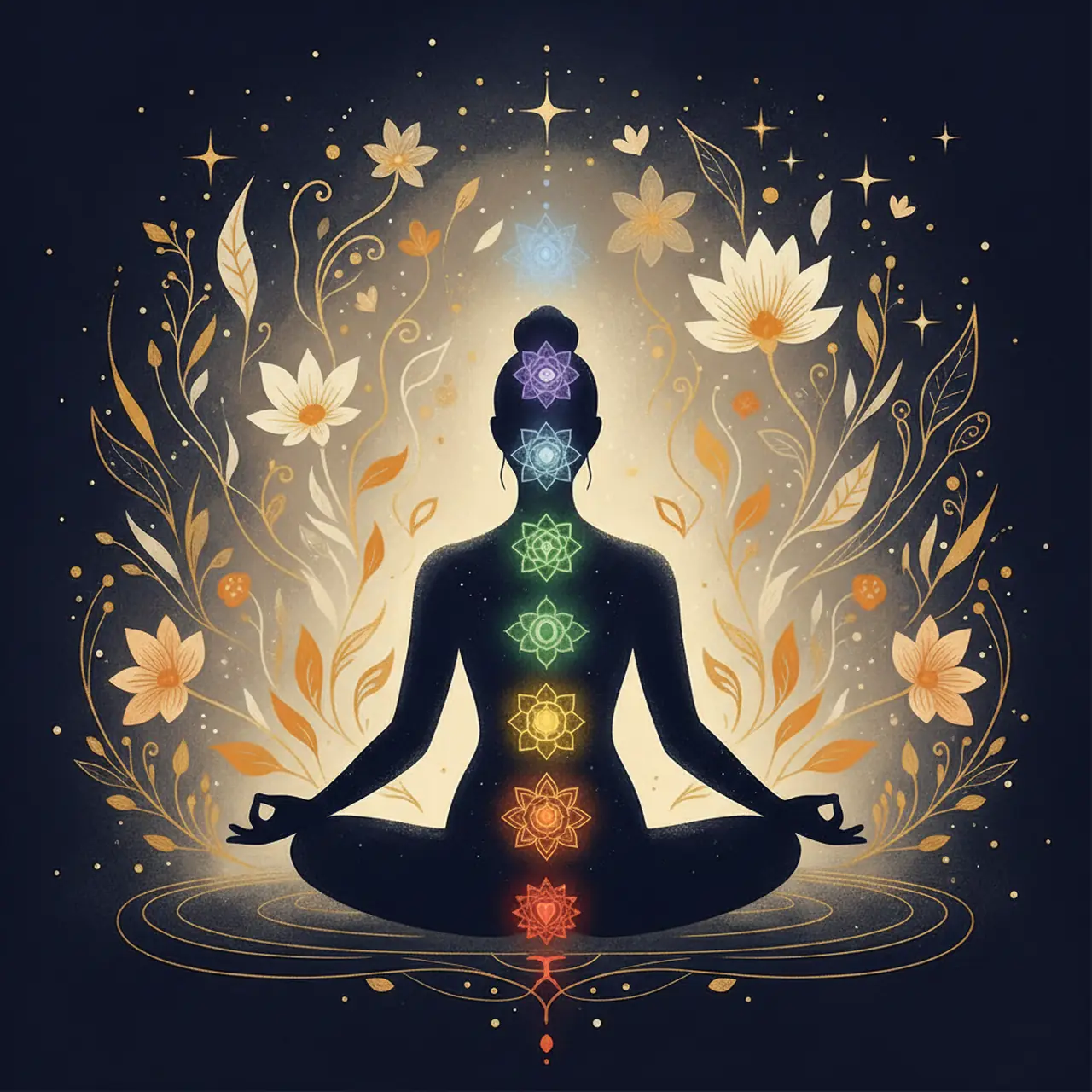
Вкратце
- Chakras are energetic and somatic focal points aligned along the spine, serving as reflective tools for physical and emotional well-being.
- The seven centres progress sequentially from primal survival and bodily stability up to higher awareness and spiritual integration.
- An energy centre can manifest in three general states: balanced, underactive (blocked or depleted), or overactive (hyper-fixated or dominant).
- Chakra work is not a substitute for healthcare, but an introspective lens to help identify somatic patterns, stress points, and emotional needs.
For thousands of years, contemplative traditions have described the human body as far more than just skin, bone, and biochemical reactions. Alongside physical anatomy lies what energy traditions call the subtle body—an interconnected network of vitality, emotion, and awareness. At the core of this system sit seven primary energy hubs known as chakras. While historical Sanskrit texts often treated them through intricate ritual and meditation systems, you do not need an esoteric vocabulary to understand their value today.
At their most practical, the chakras serve as a rich psychological and somatic map. They offer a structured framework for checking in with yourself: examining how securely you feel anchored in the physical world, how freely your creative and emotional impulses move, how clearly you express your truth, and how connected you feel to a broader sense of purpose. Rather than literal anatomical organs, they function as resonant crossroads where physical sensation, emotional experience, and mental patterns converge.
Viewing your daily life through this lens provides an empowering language for personal reflection. When you notice persistent tension in your jaw, an ongoing sense of creative exhaustion, or an unsettled feeling in your stomach before speaking up, the chakra framework offers a systematic way to investigate what your mind and body might be attempting to communicate.
The Anatomy of the Subtle Energy System
In traditional yogic philosophy, the word chakra translates directly to 'wheel' or 'disk.' These wheels represent focal nodes where internal currents of vital force, known as prana, meet and interact. The system relies on vertical channels called nadis, with the central pathway, the sushumna, running parallel to the spinal column from the perineum to the crown of the head.
The lower three chakras are largely tethered to our earthly existence, governing instinct, survival, emotional fluidity, and personal power. The upper three chakras relate to communication, perspective, discernment, and spiritual connection. Acting as the golden bridge between these two spheres is the heart chakra, which harmonises physical reality with inner consciousness.
Understanding the energetic architecture allows you to approach self-care with a balanced viewpoint. An emphasis solely on the upper, visionary centres without strong lower foundations can lead to feeling ungrounded, flighty, or detached from practical necessities. Conversely, remaining focused exclusively on lower survival centres can leave life feeling mechanical and drained of broader inspiration.
- Lower Triad (Root, Sacral, Solar Plexus): Physical embodiment, vitality, emotional drives, and personal agency.
- The Bridge (Heart): Compassion, integration, balance between inner and outer worlds.
- Upper Triad (Throat, Third Eye, Crown): Authentic expression, perception, clarity, and existential awareness.
The chakras provide a coherent language for exploring where physical sensations and emotional habits intersect along the spine.
Figures
Structural Focus of the Seven Centres
- Lower / Grounding Centres43%
- Heart / Bridge Centre14%
- Upper / Awareness Centres43%
The energetic architecture balances physical grounding, emotional integration, and cognitive clarity.
The Lower Foundations: Root and Sacral Chakras
The first centre is the Root Chakra (Muladhara), situated at the base of the spine, pelvic floor, and perineum. Paired with the element of Earth, it governs fundamental security, physical survival, familial belonging, and our relationship to material resources. When the root is balanced, you experience an unshakeable sense of safety, presence, and calm resilience. A depleted root often shows up as chronic anxiety, financial panic, or feeling disconnected from your body, whereas an overactive root can manifest as greed, rigid resistance to change, or hoarding.
Moving just above the pelvic bone sits the Sacral Chakra (Svadhisthana), associated with the element of Water. This centre rules pleasure, sensuality, creative flow, adaptability, and emotional depth. When healthy, it allows you to enjoy life's sensory richness and navigate life changes with effortless flexibility.
When the sacral energy becomes sluggish, individuals often experience emotional numbness, creative stagnation, fear of intimacy, or deep-seated guilt. If it swings into excess, it can trigger emotional volatility, dependency, compulsive behaviors, or a constant need for external stimulation to feel alive.
- Root (Muladhara): Seat at the perineum; Earth element; themes of survival, grounding, and physical security.
- Sacral (Svadhisthana): Seat in the lower abdomen; Water element; themes of pleasure, desire, creativity, and emotional fluidity.
Power and Connection: Solar Plexus and Heart Chakras
Resting in the upper abdomen around the stomach area is the Solar Plexus Chakra (Manipura), aligned with the element of Fire. Manipura is the furnace of the self, overseeing personal will, autonomy, confidence, self-discipline, and boundary-setting. A well-tended solar plexus provides the quiet inner authority required to pursue goals and stand firm in your convictions without needing to dominate others.
If the fire in the solar plexus dwindles, you may experience low self-esteem, chronic indecisiveness, passivity, or a pervasive victim mentality. When overcharged, it produces aggressive competitiveness, controlling tendencies, perfectionism, and workaholism.
At the centre of the chest lies the Heart Chakra (Anahata), linked with the element of Air. Anahata governs love, empathy, grief, gratitude, and relational harmony. It is the core of forgiveness—both towards others and yourself. A closed heart manifests as emotional coldness, defensive detachment, cynicism, and loneliness. An overactive heart, by contrast, frequently results in poor interpersonal boundaries, codependency, people-pleasing, and neglecting your own needs to rescue those around you.
- Solar Plexus (Manipura): Stomach region; Fire element; rules vitality, determination, self-worth, and willpower.
- Heart (Anahata): Centre of chest; Air element; rules unconditional love, empathy, forgiveness, and relational balance.
Personal power without an open heart turns domineering; love without strong inner authority turns self-sacrificing.
Figures
Primary Balance Vectors Across Middle Centres
- Internal Agency (Manipura)85
Autonomy & self-direction
- Emotional Boundary Strength80
Healthy limits & resilience
- Empathetic Capacity (Anahata)90
Compassion & open connection
- Self-Forgiveness & Acceptance75
Releasing resentment
Qualities cultivated when the mid-body centres function in balanced equilibrium.
Clarity and Expression: Throat and Third Eye Chakras
Positioned in the hollow of the neck is the Throat Chakra (Vishuddha), connected to the element of Ether or Space. Vishuddha is the centre of honest self-expression, active listening, artistic communication, and authentic integrity. When the throat is balanced, you speak with clarity, truth, and timing, comfortable expressing difficult realities while remaining receptive to others.
An underactive throat chakra leaves you swallowing your words, fearing judgment, or feeling completely unheard. An overactive throat manifests as talking over others, gossiping, verbal hostility, or using a barrage of words as a defensive shield against authentic intimacy.
Between the eyebrows sits the Third Eye Chakra (Ajna), paired with the element of Light. This centre represents intuition, pattern recognition, mental synthesis, and inner wisdom. A balanced third eye fosters sharp analytical intellect paired seamlessly with intuitive hunches, allowing you to perceive situations beyond their surface appearances.
When blocked, the third eye brings rigid skepticism, confusion, memory fog, or an inability to look ahead. When excessive, it can tilt into obsessive over-intellectualisation, vivid daydreams disconnected from reality, or sensory overwhelm.
- Throat (Vishuddha): Base of throat; Ether/Space element; authentic voice, creative expression, and active listening.
- Third Eye (Ajna): Brow centre; Light element; intuition, discernment, mental focus, and perceptual clarity.
Transcendence and Integration: The Crown Chakra
Resting at the very top of the head is the Crown Chakra (Sahasrara), associated with pure consciousness, thought, and transcendent unity. Sahasrara represents the culmination of the subtle journey. It is not tied to any physical element because it transcends the material world, pointing toward existential meaning, universal connectedness, and spiritual peace.
When the crown chakra is open and integrated with the grounded centres below, you cultivate a quiet sense of equanimity, finding philosophical meaning in mundane life and feeling part of a larger, coherent universe.
An underactive crown chakra can create existential despair, deep cynicism, and an isolating belief that life is entirely random and devoid of significance. An overactive or ungrounded crown, however, can manifest as spiritual bypassing—using mystical language to avoid dealing with physical health, financial responsibilities, or psychological grief.
- Crown (Sahasrara): Crown of the head; pure consciousness; existential meaning, non-attachment, and spiritual integration.
True spiritual awareness does not escape the mundane world; it enlivens our everyday life with presence and purpose.
Practical Somatic Mapping: Working with the Full Spectrum
Working with chakras does not require complex rituals or unwavering belief in metaphysical dogmas. Instead, you can use the system as a daily diagnostic checklist. When you feel off-centre, run a gentle mental scan from the base of your spine upward. Ask yourself where tension, fatigue, or hyper-arousal resides.
If you discover that your lower centres are drained while your upper centres are buzzing with anxious thoughts, the solution is rarely more thinking. It is embodiment: walking barefoot, nourishing meals, practical organisation, and breathwork that directs awareness downward. If you feel physically stuck and emotionally numb, stimulating the sacral and solar plexus through movement, creative hobbies, or honest communication can reignite vitality.
By approaching the chakras as an integrated ecosystem rather than isolated switches, you honor the dynamic interplay between body, heart, mind, and spirit.
- Grounding Routine: Focus on Root and Sacral to calm nervous system hyper-vigilance.
- Assertiveness Routine: Focus on Solar Plexus and Throat to speak up and set firm limits.
- Restorative Routine: Focus on Heart, Third Eye, and Crown to release resentment and gain perspective.
Timeline
The Seven-Tier Ascending Spectrum
1. Muladhara (Base)
1Root: Physical safety & survival
2. Svadhisthana (Pelvis)
2Sacral: Emotion, pleasure & flow
3. Manipura (Solar Plexus)
3Navel: Agency, will & confidence
4. Anahata (Heart)
4Heart: Love, empathy & integration
5. Vishuddha (Throat)
5Throat: Truth, expression & voice
6. Ajna (Third Eye)
6Brow: Insight, intuition & vision
7. Sahasrara (Crown)
7Crown: Awareness & unity
The progressive sequence of energy centres along the central spinal axis.
The seven chakras offer a timeless, elegant architecture for personal reflection. By mapping the full range of human experience—from physical security and emotional desire to clear expression and quiet consciousness—this ancient framework helps us locate where our energy flows freely and where it meets resistance.
As you move through your daily life, allow this map to guide your self-inquiry with gentleness and curiosity. Rather than striving for an impossible state of perpetual perfection, view your energy body as a living, breathing landscape that simply asks for regular awareness, care, and respectful alignment.
StartBound.Life
Explore Your Personal Energy Map
Discover how your energy centres are currently aligning with our intuitive chakra tool. Gain clear, actionable reflections tailored to your physical and emotional well-being.
Check Your ChakrasВопросы читателей
What causes a chakra to become blocked or overactive?
Chakra imbalances are generally somatic responses to chronic stress, emotional suppression, environmental pressure, or unprocessed past experiences. For example, growing up in an unstable environment can cause an underactive root chakra (chronic insecurity), while an environment where you were never heard might result in an underactive throat chakra.
Can chakra work replace conventional psychological or medical treatment?
No. Chakra practices are contemplative frameworks for self-reflection, mindfulness, and somatic awareness. They are complementary tools designed to enhance self-understanding and stress management, and should never be used as a substitute for professional medical, psychiatric, or therapeutic care.
How can I quickly tell which chakra needs attention?
Pay attention to where you hold physical tension and what recurring emotional patterns appear. If you feel fearful about resources, check the root; if you struggle to express feelings, examine the throat; if you feel burnt out and unmotivated, investigate the solar plexus. A reflective somatic check-in often reveals the focal area immediately.
Do I need to believe in subtle energy for the chakra model to be useful?
Not at all. You can treat the chakra system entirely as a psychological metaphor and somatic map. Many modern practitioners view it simply as an intuitive, structured way to categorise human needs, emotional states, and bodily sensations without requiring any metaphysical belief.
Продолжить обсуждение
Больше из журнала
Больше по этой теме
Chakras, aura, breath and the body's part in a practice.
Energy →Предсказания предлагаются для размышления и развлечения. Они не заменяют медицинские, юридические, финансовые или психологические консультации.