Two cards, one sentence
Tarot card combinations
A single card is a word; two cards make a sentence. Choose a pairing to read the combined message, how it lands in love and work, what it means reversed, and whether it answers yes or no.
Most looked-up pairings
Every Major Arcana pairing
The Fool
The Magician
The High Priestess
The Empress
The Emperor
The Hierophant
The Lovers
The Chariot
Strength
The Hermit
Wheel of Fortune
Justice
The Hanged Man
Death
Temperance
The Devil
The Tower
The Star
The Moon
The Sun
Judgement
251 indexed pairings·Build your own combination reading·All 78 card meanings
In short
Look up what any two tarot cards mean together: the combined message, love and career readings, reversed pairings, timing and a yes-or-no answer for hundreds of card pairs.
- Majors beside minors raise the stakes: the minor stops being an ordinary week and becomes part of a larger arc.
- Two court cards usually indicate people rather than qualities, and the relationship between them is the reading.
- If a pair refuses to make sense, swap the order. One direction almost always reads cleanly.
- Keep your own combination notes in the journal. Personal pair meanings become far more reliable than any published list.
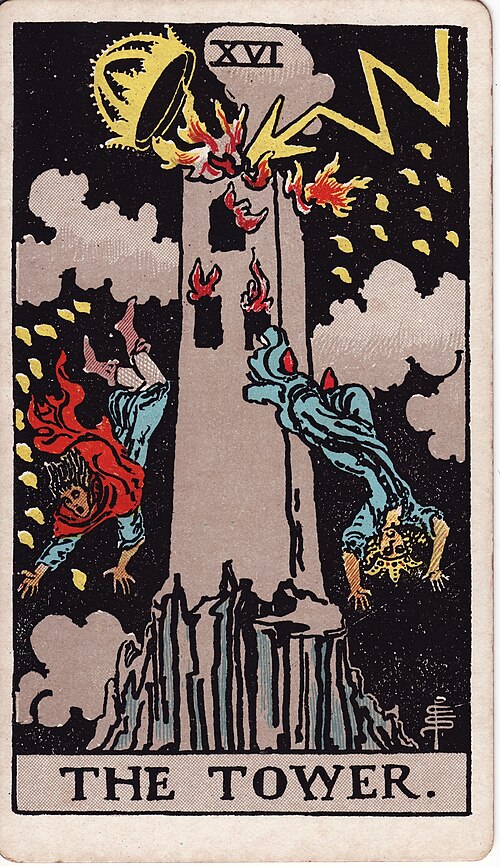
The Tower
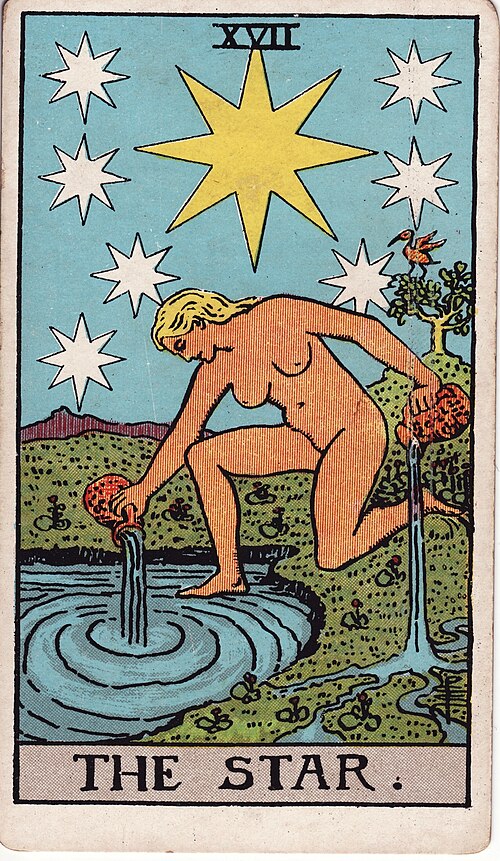
The Star


3,003
indexed pairings
78
cards
4
elements
19th c.
elemental dignities
Origins
Reading cards in combination rather than one at a time is what separates a tarot reading from a lookup table. The practice is as old as the cartomantic spread itself: eighteenth-century French readers under Etteilla already read neighbouring cards as modifying one another, and the Golden Dawn formalised it with elemental dignities in the nineteenth century.
Elemental dignity is the mechanical version. Cards of the same element strengthen each other, complementary elements — fire with air, water with earth — support each other, and opposing elements weaken both. A Cups card beside a Wands card describes a genuinely divided situation before any imagery is considered.
The narrative version is older and simpler: read the pair as a sentence. One card is the condition and the other the consequence, and the direction of that sentence is set by the position in the spread. Seventy-eight cards produce 3,003 unique pairings, and each has a distinct meaning that neither card carries alone.
The Method
Name each card alone first
One clause per card, in your own words. Combination reading fails whenever the individual meanings were fuzzy to begin with.
Check the elements
Same element intensifies, complementary supports, opposing dilutes. This alone tells you whether the pair is a push or a stall.
Read the pair as one sentence
Condition then consequence: because of the first, the second. Reversing the order gives a different and equally valid reading — the spread position decides which applies.
Note the repeats
Two Aces, two court cards, two of the same number or suit. Repetition is the loudest signal in any spread and usually names the actual subject.
Look at the pictures
Where the figures face, what they hold, whether they are moving toward or away from each other. Rider–Waite–Smith imagery was designed to be read across adjacent cards.
Practice Notes
- Majors beside minors raise the stakes: the minor stops being an ordinary week and becomes part of a larger arc.
- Two court cards usually indicate people rather than qualities, and the relationship between them is the reading.
- If a pair refuses to make sense, swap the order. One direction almost always reads cleanly.
- Keep your own combination notes in the journal. Personal pair meanings become far more reliable than any published list.
Myth & Truth
Commonly said
Each pairing has one fixed meaning.
In practice
Position, question and surrounding cards all shift it. Published pair meanings are starting points, not definitions.
Commonly said
Bad pairs predict bad outcomes.
In practice
The heavy pairings — Tower with Death, Three of Swords with Ten of Swords — describe pressure and endings, which are processes with a shape you can work with.
Commonly said
You need to memorise all 3,003 combinations.
In practice
Nobody does. Learn the 78 cards, the four elements and the dignity rules, and every pair becomes readable on sight.
Questions Readers Ask
How many tarot card combinations are there?
3,003 unique unordered pairs from a 78-card deck, and every one of them is indexed here with its own reading covering the pull between the cards, the timing and the practical advice.
What are elemental dignities?
A Golden Dawn rule for how adjacent cards affect each other. Same element strengthens, fire with air and water with earth are friendly, fire with water and air with earth weaken both, and neighbouring cards of mixed dignity produce a mixed result.
How do I read two cards together?
Read each alone, then join them into one sentence in which the first sets the condition and the second the consequence. Check the elements to see whether the pair is reinforcing or conflicting, and let the position in the spread decide the direction.
What does it mean when two Major Arcana appear together?
That the question is structural rather than situational. Two majors side by side usually mean the matter is bigger and slower than the querent thinks, and that the outcome depends on something already in motion.
Do reversals change a combination?
They can invert, delay or internalise one half of the pair. A common approach is to read the pair upright first for the shape of the situation, then apply the reversal as a modifier of intensity or timing.
Read the cards in context
A card's meaning changes with the question and its position in a spread. The same image can describe a resource, an obstacle or an action to consider. Name the question first, then notice the card's figures, objects and direction of movement. Keywords are a starting vocabulary, not a verdict about what must happen.
For a pair, compare the two themes before blending them: do they reinforce each other, introduce a contrast, or suggest a possible sequence? Read both orientations and state what evidence in your situation would support each. Reversals may indicate blockage, excess or an inward focus; they do not automatically turn every yes into a no.
No spread can reliably reveal someone else's private feelings or give a guaranteed date. If a reading leads to a useful insight, choose one small action and review the outcome later. Repeated draws for the same question can increase confusion rather than certainty. Do not use cards as a substitute for medical, legal or financial advice.
For example, the Tower and the Star can be read as disruption alongside hope and renewal. In a situation-and-advice spread, that might invite you to acknowledge what changed and identify available support. In two obstacle positions, the same cards could raise questions about instability and unrealistic expectations. The positions change the reading; the pair does not promise disaster followed by rescue.
What observable action follows from this reading, and what would make me reconsider it?