The Magazine
Topic Energy
Chakras, aura, breath and the body's part in a practice.
Free tools in this topic
Other topics
In short
Chakras, aura, breath and the body's part in a practice. Every energy feature from the daily magazine, in eleven languages, with the free tools behind each one.
- Short and daily beats long and occasional. Ten minutes for a fortnight teaches more than one long session.
- Track one centre for a week rather than auditing all seven each day.
- Physical symptoms belong to a doctor first. Energy work sits alongside medical care, never instead of it.
- Crystals, sound and colour are focusing aids. If the practice only works with props, practise once without them.
7
Centres mapped
5
Elements
10 min
Session floor
1919
First English text
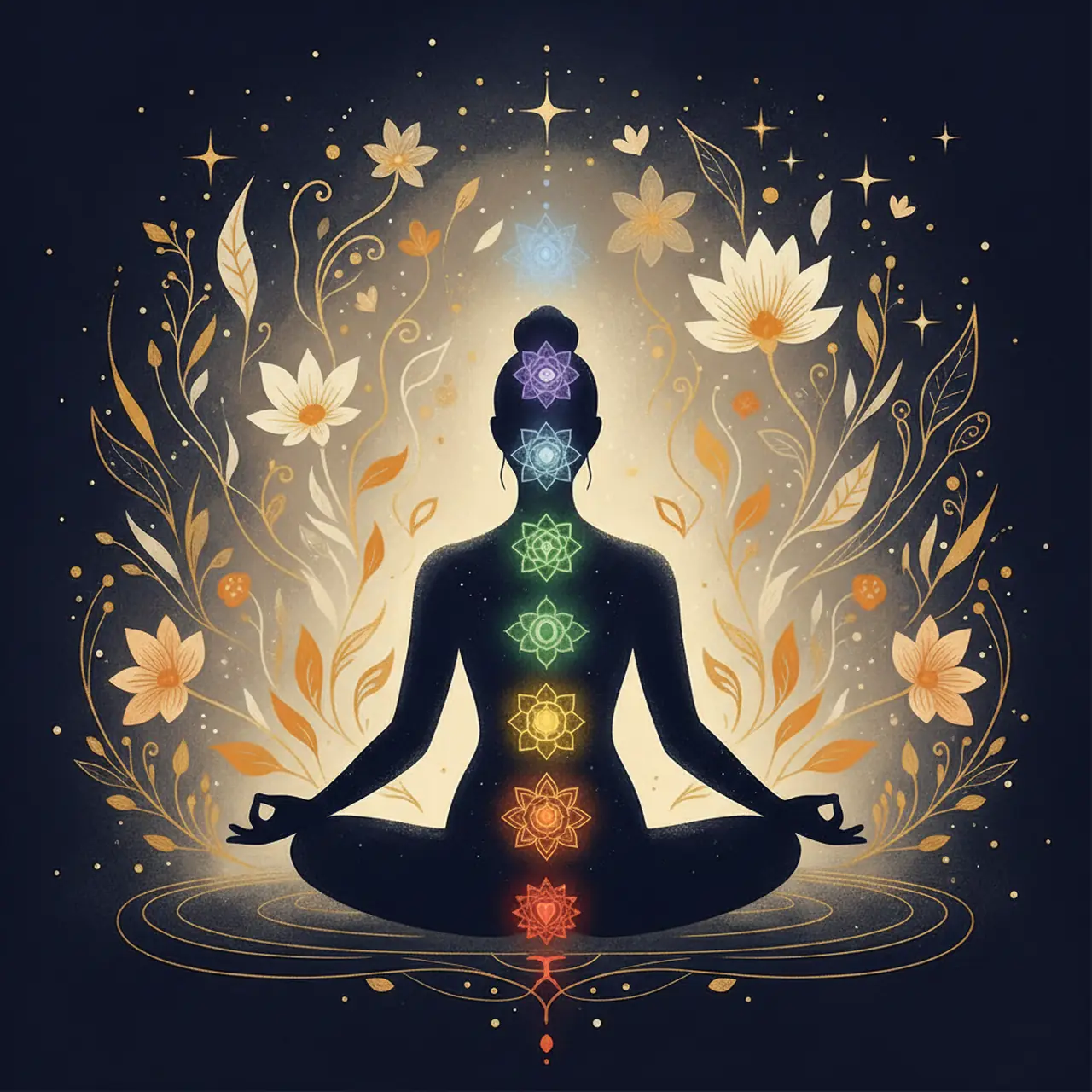
The seven centres at a glance
Seat, element and domain for each centre, with the behaviour that usually signals it needs attention.
| Centre | Seat | Governs | Signal |
|---|---|---|---|
| Root | Base of spine | Safety, resources | Chronic low-level dread |
| Sacral | Lower abdomen | Appetite, creativity | Numbness or compulsion |
| Solar plexus | Upper abdomen | Will, agency | Deferring every decision |
| Heart | Centre of chest | Connection | Withdrawal or over-giving |
| Throat | Throat | Expression | Unsaid sentences |
| Third eye | Brow | Insight | Overthinking without clarity |
| Crown | Top of head | Meaning | Flatness, loss of purpose |
The subtle-body map used across modern energy work is a composite. Tantric texts describe centres cultivated by breath and mantra with counts varying from four to twelve; Arthur Avalon's 1919 translation introduced them to English readers; theosophical writers then matched them to rainbow colours and endocrine glands, neither of which appears in the source material.
This topic keeps the practice and marks the additions. Breath, attention and posture are the working parts; the colour charts are a mnemonic. Written that way, energy work stays useful without pretending to be physiology.
Questions Readers Ask
Is there evidence for chakras or auras?
Not as physical structures. What is well evidenced is that slow breathing, posture and focused attention change nervous-system state — which is what most of these practices actually deliver.
How long should a session be?
Ten to twenty minutes. Longer sessions are more likely to be skipped, and consistency is what produces change here.
What does the chakra test measure?
Seven self-report questions scored per centre, returning balanced, blocked or overactive with a practice, a stone and a mantra for each.
Can I do this alongside therapy?
Yes, and it complements it well. Grounding and breath practices are standard adjuncts. Tell your clinician what you are doing.